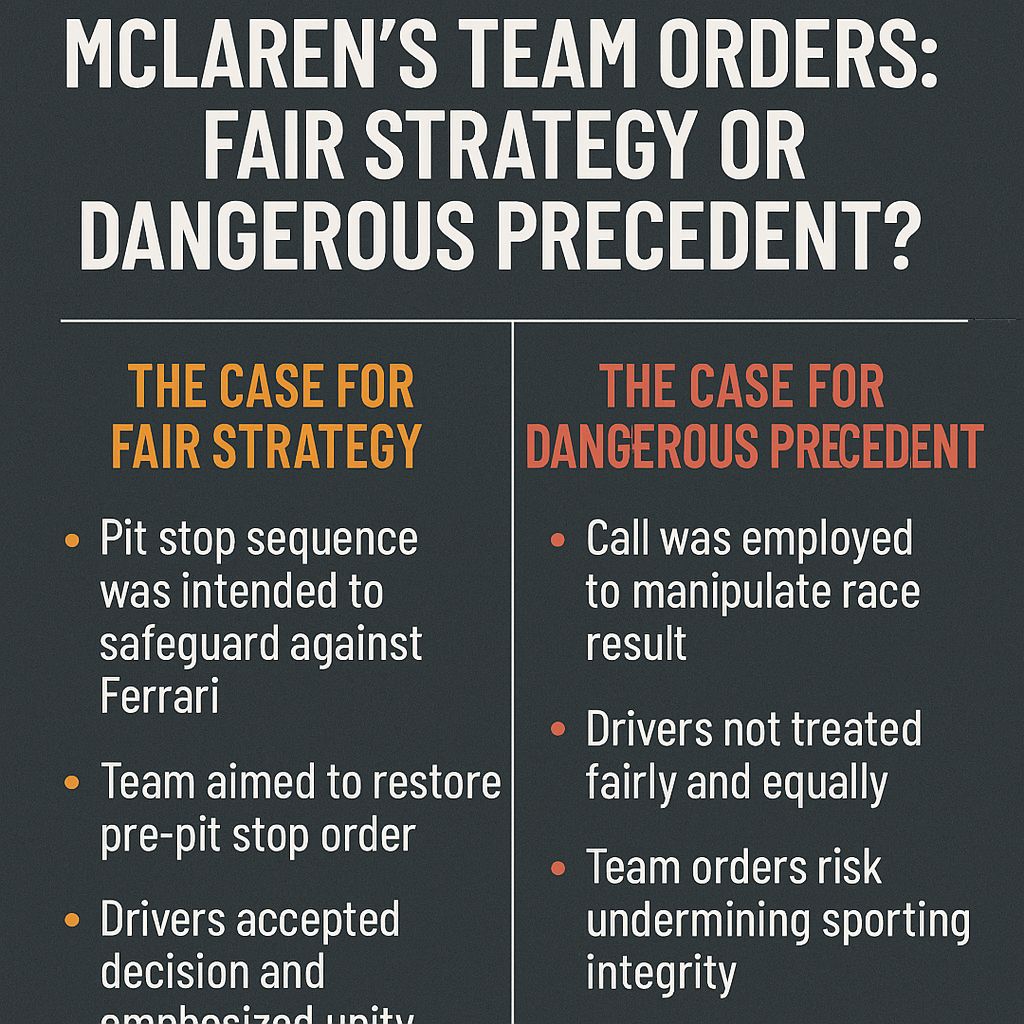
In Monza, McLaren’s decision to instruct Oscar Piastri to relinquish second place to Lando Norris—not due to race merit but because of a slow pit stop—raises urgent questions about the integrity of its championship battle. Both drivers affirmed their commitment to team orders, insisting they remain unshakeable, even as the stakes grow higher with the season closing in.
On the surface, their unity—declaring, “The team is priority No 1”—paints a picture of disciplined cohesion. Norris emphasized the ethos bluntly: “Without the team, we’re just fighting for 10th.” Piastri echoed the sentiment, pointing out that surviving and thriving within McLaren demands safeguarding the team’s groundwork, “protecting the people around us”.
Nonetheless, the optics are murkier. Toto Wolff of Mercedes called for caution, warning this could set a “very difficult to undo” precedent—opening the door for future team orders not rooted in fairness but in convenience. Critics argue this could stifle genuine competition and produce artificial racing outcomes.
Yet McLaren justifies its approach as consistent with its “Papaya Rules”: a culture of equitable treatment where internal rivalries do not undermine team essence. The approach earned praise for harmonizing the drivers amid Red Bull’s dominance—so far.
But danger lurks beneath the strategy: as the championship heats up, what happens when the title fight comes down to a micromanaged radio command rather than raw racing instinct? One wonders if the same order would be maintained when margins are paper-thin—and emotions unavoidably razor-sharp.