T20 World Cup 2026: Cricket’s Reckoning — Power, Politics, Pride and Pure Performance
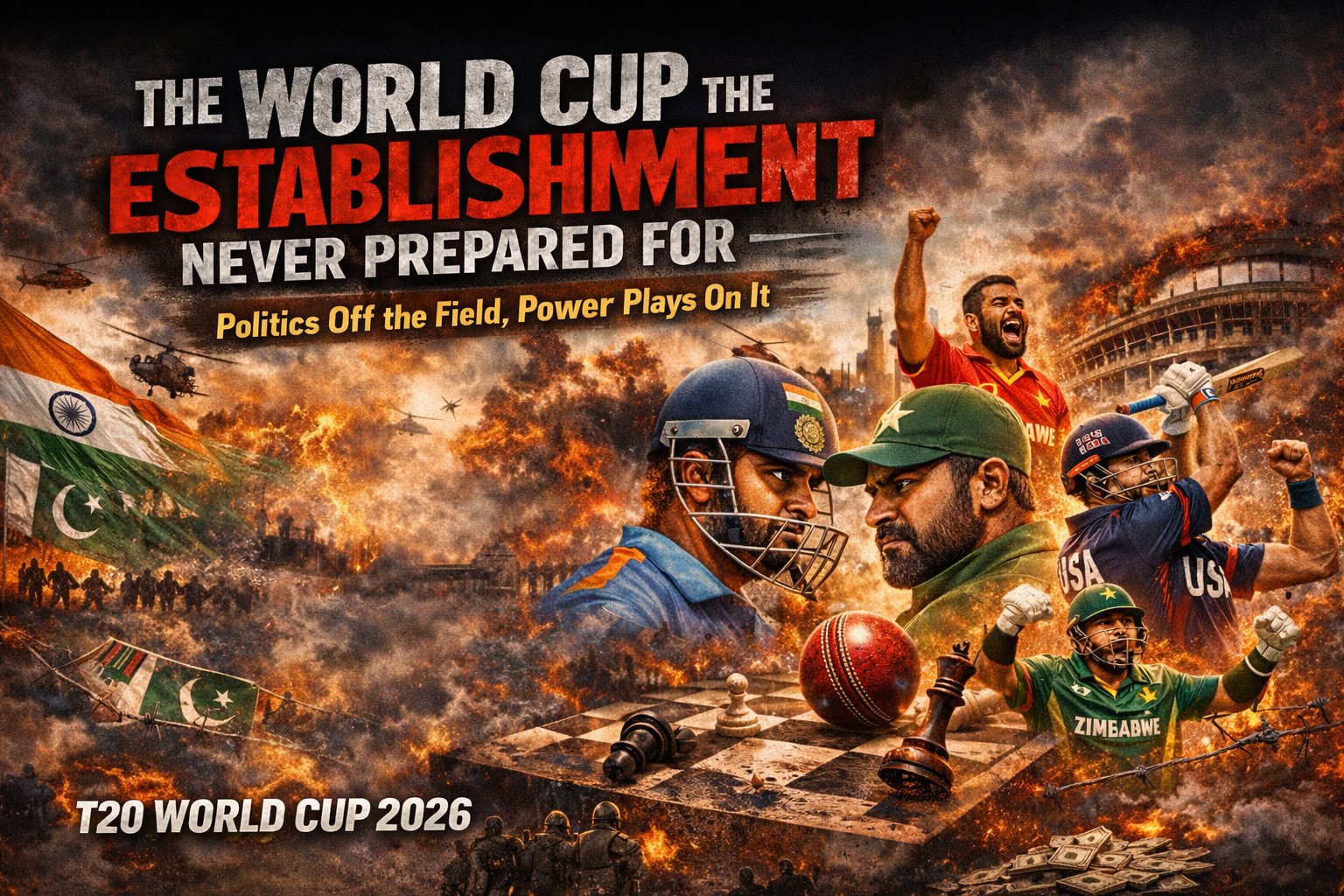
If you came into the ICC Men’s T20 World Cup 2026 expecting a sanitized parade of six-hitter highlights and sanitized narratives, you’re already obsolete. This tournament has ripped its shiny veneer off and exposed what cricket really is in the 21st century — a battlefield where politics, identity, power plays, inequality and hard-nosed tactics collide at pace.
The stage isn’t neutral. It’s charged.
📌 Scene one: Politics Before Play
Let’s get one thing straight: the drama before the first ball was delivered has already outclassed anything on the pitch.
Remember that India–Pakistan controversy? The match was teetering on a full-blown boycott after Pakistan initially refused to play India following Bangladesh’s withdrawal over safety concerns — a move that threatened the sport’s multibillion-dollar broadcast machine. An ICC intervention eventually salvaged the fixture, but the rancor laid bare the bitter truth that cricket is no longer just about runs and outs — it’s about national leverage, sentiment, and geopolitical theater.
And if one bowler’s handshake becomes a symbol, it tells you exactly how far removed the sport is from the ivory-tower ideal of “gentleman’s cricket.” The captain of Pakistan publicly declared that whether handshakes happen — that basic, polite ritual — was “entirely up to India,” turning a simple gesture into a diplomatic chess piece.
That’s not sport. That’s culture war with bats and balls.
🎯 Scene two: Unpredictable Cricket — The New Hierarchy
But let’s get to the cricket — because on the pitch, this edition is utterly destructive of expectations.
Zimbabwe’s Disruption — Not Luck, Not Noise, But Strategy
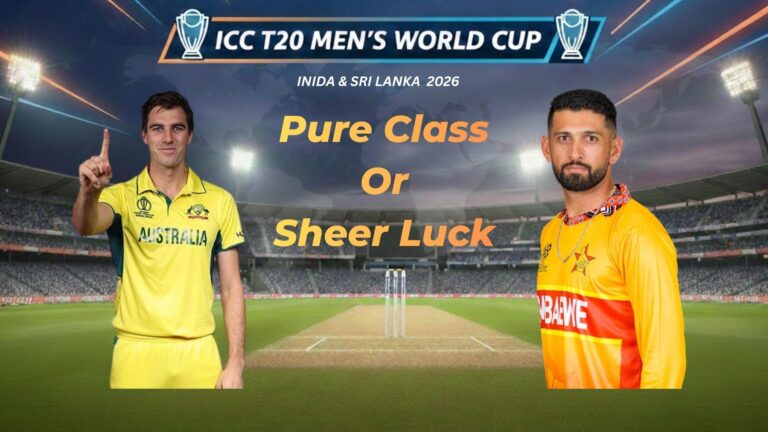
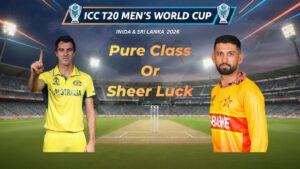
Zimbabwe’s 23-run demolition of Australia in Colombo wasn’t a feel-good underdog blip. It was a brutal reminder that the era of assumed hierarchy is over. With disciplined bowling and intelligent strategy, they exposed Australia’s composition issues and tactical rigidity — forcing the cricket establishment to reconsider what “competitiveness” really means.
Australia’s collapse was tactical folly: poor tempo management, fragile top order structure, and a failure to adapt to Zimbabwe’s bowling unity. This isn’t an upset — it’s cricket scholarship beating legacy.
USA — Not Here for Participation Trophies
Flip the narrative to the United States — a team that didn’t just take part, but punched, by crushing the Netherlands by 93 runs with Saiteja Mukkamalla’s 79 and Harmeet Singh’s four-wicket ripper. That’s not a meditation on luck — that’s big-thinking cricket execution from a group that has watched, learned and improved.
If America’s cricket world thought they’d just show up and play, they were mistaken. They showed up to compete.
Italy — Debutants With Teeth
Italy came into their first World Cup as an afterthought. Yet they steamrolled Nepal by 10 wickets, a victory more seismic than most pundits cared to admit. In only their second match at this level, Italy didn’t just win — they commanded.
This is what happens when the gatekeepers assume skill is linear and pedigreed. It isn’t. Energy, planning, fearlessness — that’s cricket too.
🔍 Tactical Rigor Over Tradition
Forget the old T20 script — this isn’t “smash and dash.” It’s precise aggression, analytical response, data-informed decisions that see:
- Bowling rotations designed to match specific batsmen metrics.
- Powerplay pacing executed like timed operations.
- Death bowling plans tailored not by intuition but probable run-out outcomes.
Old instincts were yesterday’s heroes. Today’s victories are sculpted by strategy as much as skill. This is cricket as chess at 140 km/h.
🏆 Full Members — Auditions, Not Authority
And to the so-called big names:
India
Comfortably crushing the lesser sides is expected — not applause-worthy. But within that, smart spin usage and controlled innings pacing show they know how to manage pressure, not just score runs. They win — but with authority, not arrogance.
England
Tom Banton’s blazing 63 against Scotland was good — but it also exposed traditional top-order frailties. England survives with flashes of brilliance, but with lingering strategic cracks.
Pakistan
With Usman Tariq’s unconventional bowling and a captain steering psychological narrative off the field, Pakistan isn’t just playing cricket — they’re maneuvering it. Whether this mentality translates into trophies depends on execution, not rhetoric.
⚡ The Sociological Undercurrent — Inequity Exposed
While the so-called powerhouses played their scripted roles, the associate nations are reshaping the narrative — not just the scorecards.
Players like Shayan Jahangir of the USA have openly criticized the ICC for lack of structural support, contrasting rising competitive spirit with perceived institutional neglect. This isn’t whining — it’s reality check from the frontlines.
And Namibian captain Gerhard Erasmus made the blunt point that more frequent exposure — not just token participation — is what will make associate teams consistently competitive.
These aren’t cute moments. They are pressure points — a demand for equity in a sport that still distributes opportunity like privilege.
🏁 The Bottom Line
The 2026 T20 World Cup is far more than cricket. It’s a microcosm of modern sport, society and power structures:
- Politics isn’t external — it’s embedded in scheduling, handshake disputes and broadcast economics.
- Tactical innovation isn’t optional — it’s the currency of wins.
- Associate teams aren’t novelty acts — they’re challengers redefining benchmarks.
Cricket in 2026 rejects hand-me-down authority. It celebrates execution over entitlement, strategy over reputation, and fearless action over polite tradition.
This World Cup doesn’t just crown winners on the field — it exposes the truths we dare not ignore off it.